

Description
Technical Parameters
Introduction to Safety Mat Sensors
Product Overview
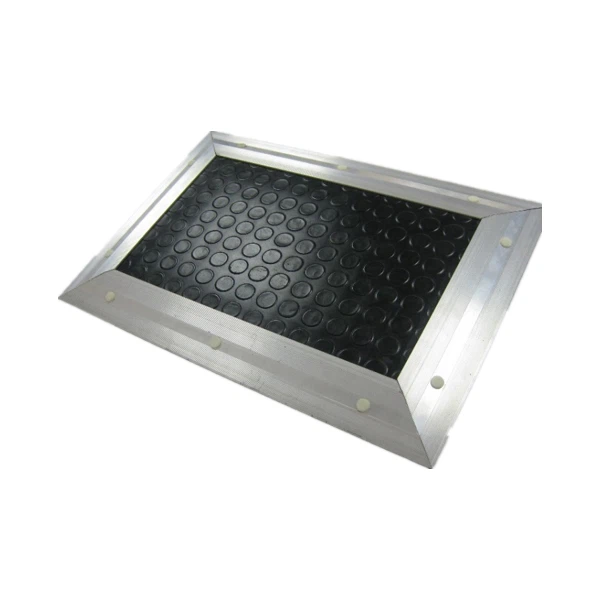
- A safety mat sensor is a pressure-sensitive area protection safety device. It is typically made of multiple layers of durable materials and resembles a carpet or mat in appearance. It detects the presence of a person or object standing, walking, or applying pressure on a specific area of its surface and outputs a safety switch signal.
- Its core function is to create an invisible safety boundary. When personnel or objects enter a hazardous area, it can immediately trigger a machine to stop or enter a safe state, thereby effectively preventing industrial accidents such as collisions, crushing, and entanglement. It is a key device for enabling human-machine collaboration and ensuring personal safety.
Working Principle
- A safety mat is a normally closed (NC) safety switch. It usually consists of two parallel conductive sensing layers inside, separated by tiny insulating spacer dots.
- Normal State (No Pressure): The two conductive layers are separated, the circuit is open, and a "safe" signal is output.
- Activated State (Pressure Applied): When sufficient weight (typically ≥ 25kg) is applied to the mat, the conductive layers make contact at the pressure point, the circuit closes, and a "danger" signal is output.
- This signal is connected to a safety relay or safety PLC, which then cuts off the power source of the hazardous equipment (e.g., triggering an emergency stop).
Core Features and Advantages
- Active Area Protection: Unlike the single-point or linear protection of light curtains, safety mats cover a complete, continuous planar area with no blind spots, ensuring detection of any part of a person's body (including feet) entering the hazardous zone.
- High Safety and Reliability:
- Complies with international safety standards such as IEC 61496 (Type 4, highest safety level) and ISO 13856-1.
- Features self-testing (passive or electronic monitoring) designs that can detect internal faults like short circuits or breaks in real-time, ensuring fail-safe operation.
- Easy Installation and High Flexibility:
- Can be laid directly on the floor without complex mechanical installation or precise optical alignment.
- Can be cut, spliced, or custom-made into irregular shapes to fit various complex work environments.
- The surface is slip-resistant, wear-resistant, and resistant to oil and dirt, suitable for harsh industrial sites.
- Improved Productivity:
- Allows operators to move freely within safe areas, triggering a stop only when entering the hazardous zone. This reduces the workflow obstruction caused by traditional fixed guards, facilitating material handling and equipment maintenance.
- Durability and Low Maintenance:
- Made of high-strength PVC, rubber, and other materials, resistant to fatigue, impact, and chemical corrosion. It has a long service life and requires minimal daily maintenance.
Typical Technical Specifications
- Working Sizes: Standard modules (e.g., 500x500mm, 1000x1000mm), can be spliced to cover large areas.
- Actuation Force: Typically 25kg to 80kg (adjustable), effectively preventing false triggering by small fallen objects.
- Thickness: 8mm to 25mm, with high compressive strength.
- Protection Rating: IP65 / IP67, dustproof and waterproof, suitable for damp or washdown environments.
- Surface Material: Slip-resistant PVC, rubber; optional anti-static, oil-resistant, acid/alkali-resistant properties.
- Output Signal: Dual-channel OSSD (Output Signal Switching Device) or relay dry contacts, directly connectable to safety control systems.
- Operating Temperature: -30°C to +70°C (wide-temperature version).
Main Application Scenarios
- Safety mats are widely used in situations requiring physical separation between personnel activity areas and machine hazard zones:
- Industrial robot workstations: Laid around the robot's working radius to form a safe operating zone.
- Stamping, forging, and injection molding machines: Protects mold areas to prevent operator intrusion during clamping.
- Automated assembly lines and material handling systems (AGVs/shuttles): Demarcates pedestrian and vehicle pathways.
- Packaging machinery, woodworking machinery, machine tools (press brakes, shears): Protects tooling and machining areas.
- Laboratories and R&D centers: Protects precision or hazardous experimental equipment.
- Exhibitions and public facilities: Serves as an invisible boundary to control access to specific areas.
Hot Tags: safety mat sensor, China safety mat sensor manufacturers, factory, sensor and types, different sensor types, servo sensor, industrial automation sensors, sensor servo motor, motor with sensor